
Why Indian Astrology?
That's a fair question - as after all, we have our own systems here in the West.

Indian and Western astrology differ in minor details
these differences are primarily of astronomical and technical significance
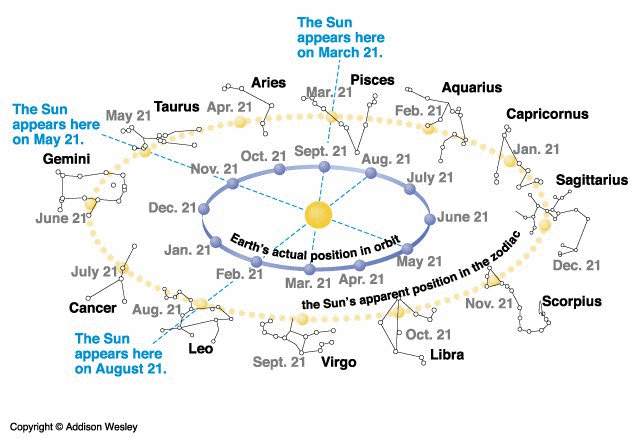
Tropical or Sidereal Zodiac
Indian astrology considers the planets in the sky based on their actual positions in the firmament, relative to the fixed stars.
Western astrology, on the other hand, uses the so-called tropical zodiac.
In this system, the planetary positions in your horoscope do not correspond to astronomical reality.
continue reading (in German)
Nine Planets in Jyotish
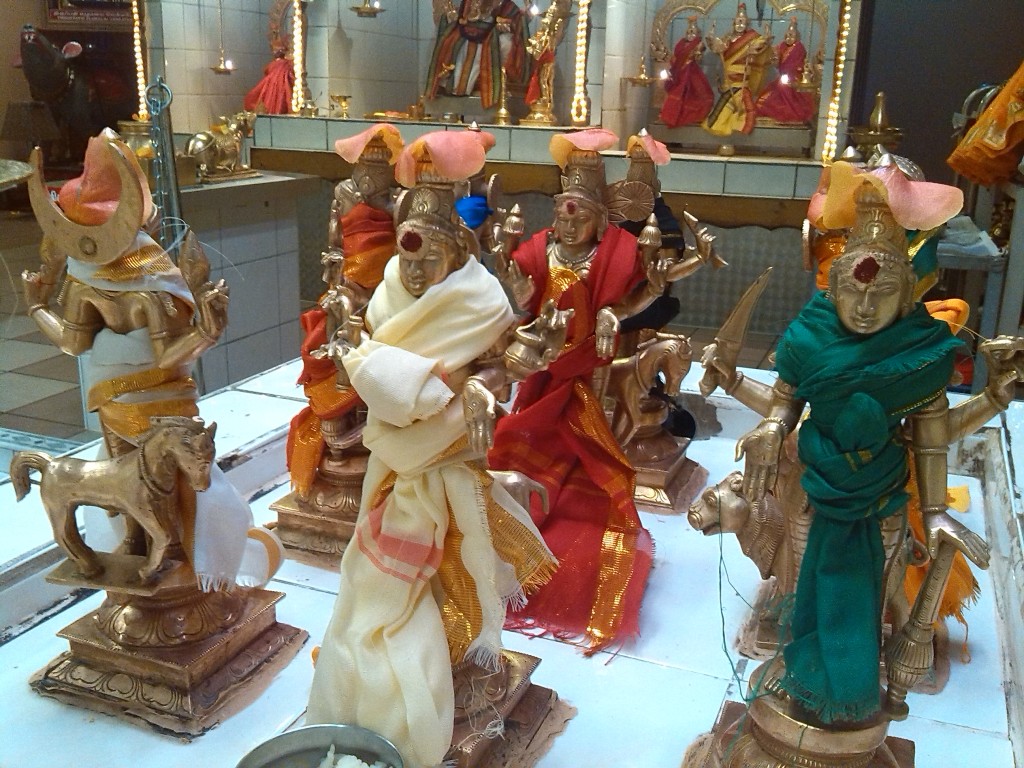
In Jyotish, we work exclusively with the planets familiar to us from ancient Western astrology: Mercury, Venus, the Moon, the Sun, Mars, Jupiter, and Saturn. In addition, the two lunar nodes, Rahu and Ketu, play a very significant role. These are not actual planets, but rather calculated points of intersection; however, in Indian astrology, they are treated as planets.
Solar or Lunar Astrology
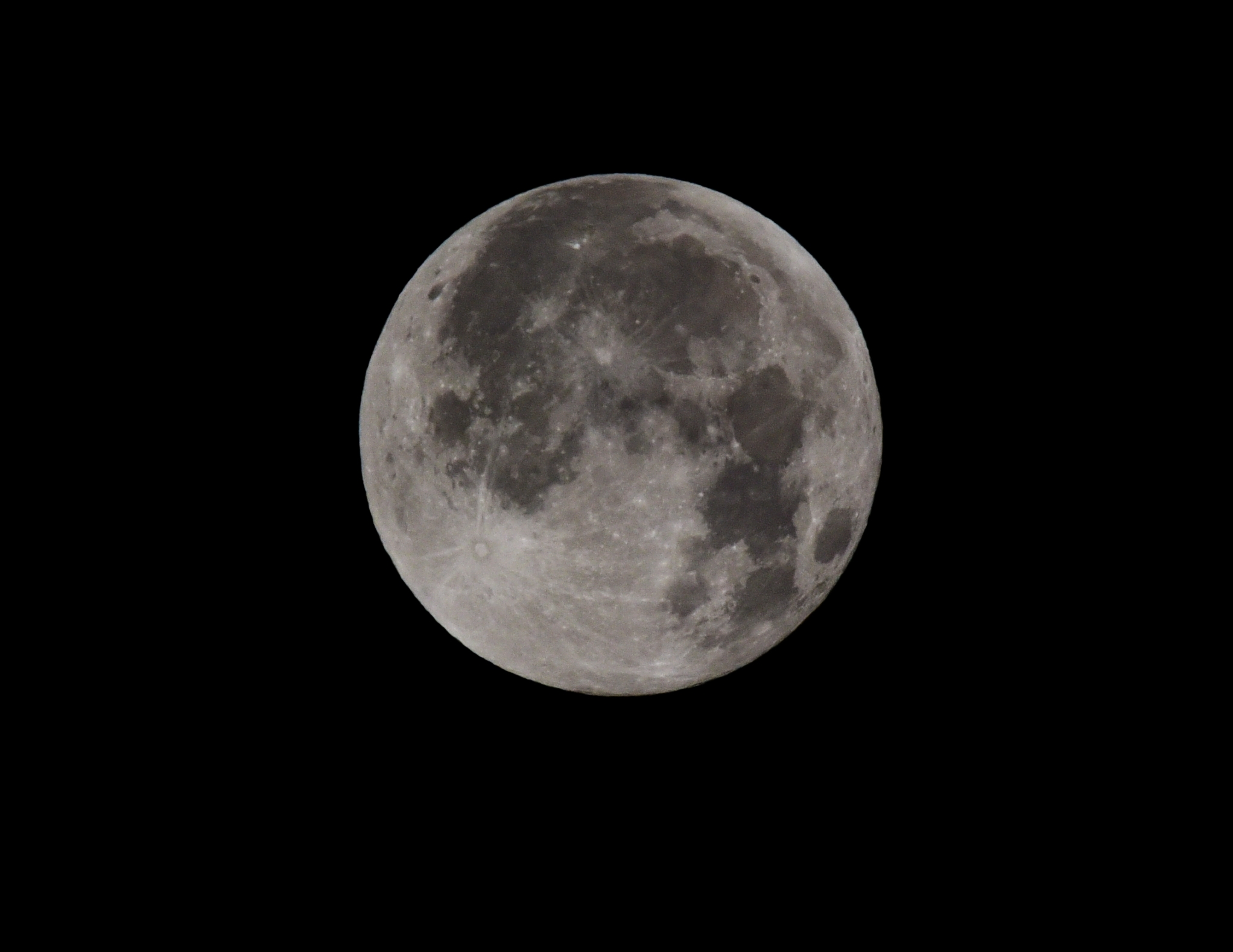
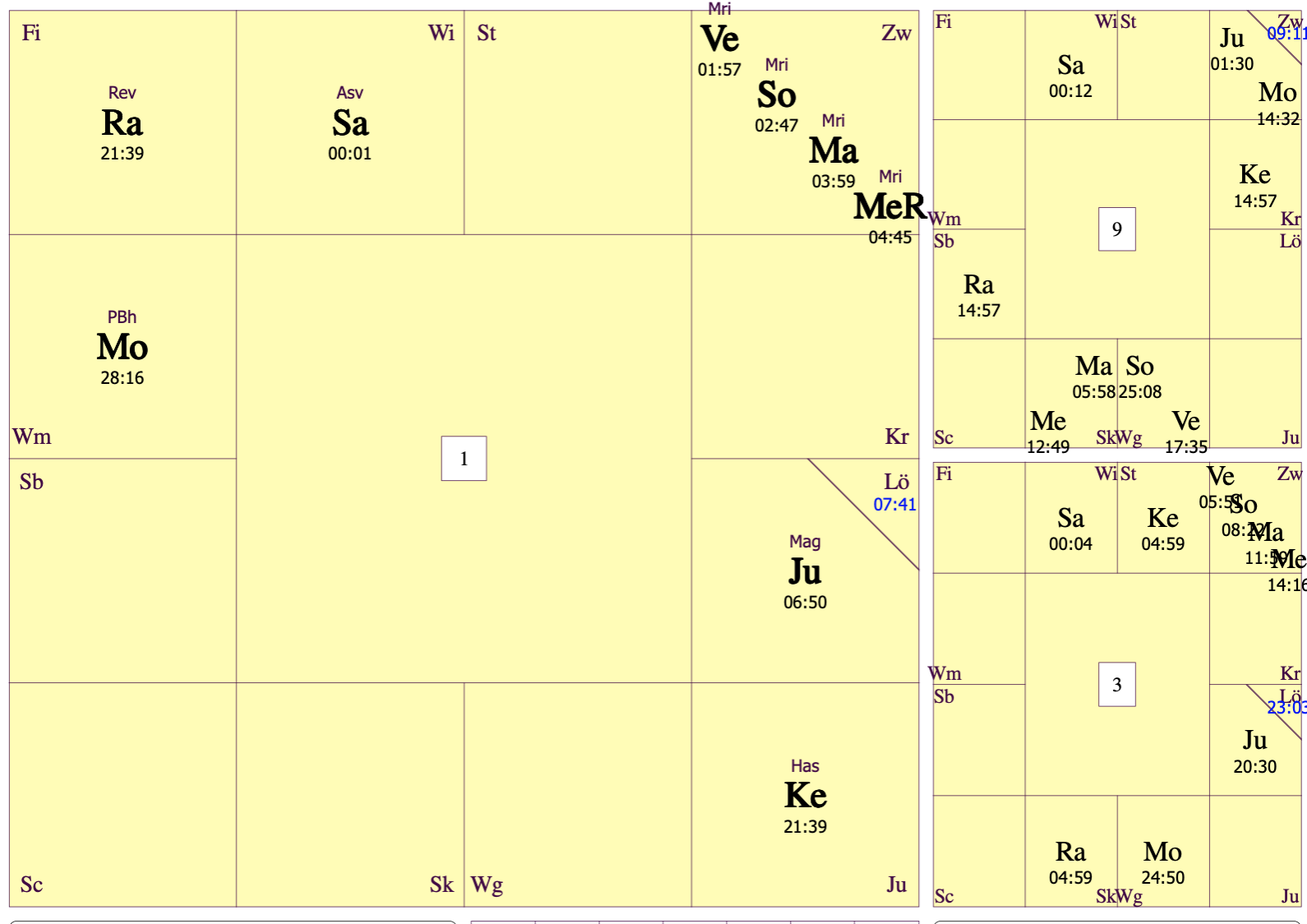
While in Western astrology the position of the Sun at the moment of birth is considered particularly relevant (the zodiac sign), in an Indian horoscope the Moon is the more important factor alongside the ascendant.
For example, if someone in India asks you, “What’s your star?”, you don’t name the position of the Sun in the form of your “zodiac sign,” but rather you state the position of the Moon at birth within the respective fixed-star constellation.
In Sanskrit, this constellation is called a nakshatra, sometimes also referred to as a "birth star."
The Yogas
Unlike in Western astrology, where the angular relationships between two reference points are analyzed, the numerous yogas are one of the many specialties of Jyotish. A yoga is a combination that sometimes involves a single planet, but more often involves several planets in relation to one another or, for example, to the ascendant, the Moon, or the Sun, thereby defining a corresponding interpretation that has been handed down from ancient times.
Dasa Cycles - "Times Change You"
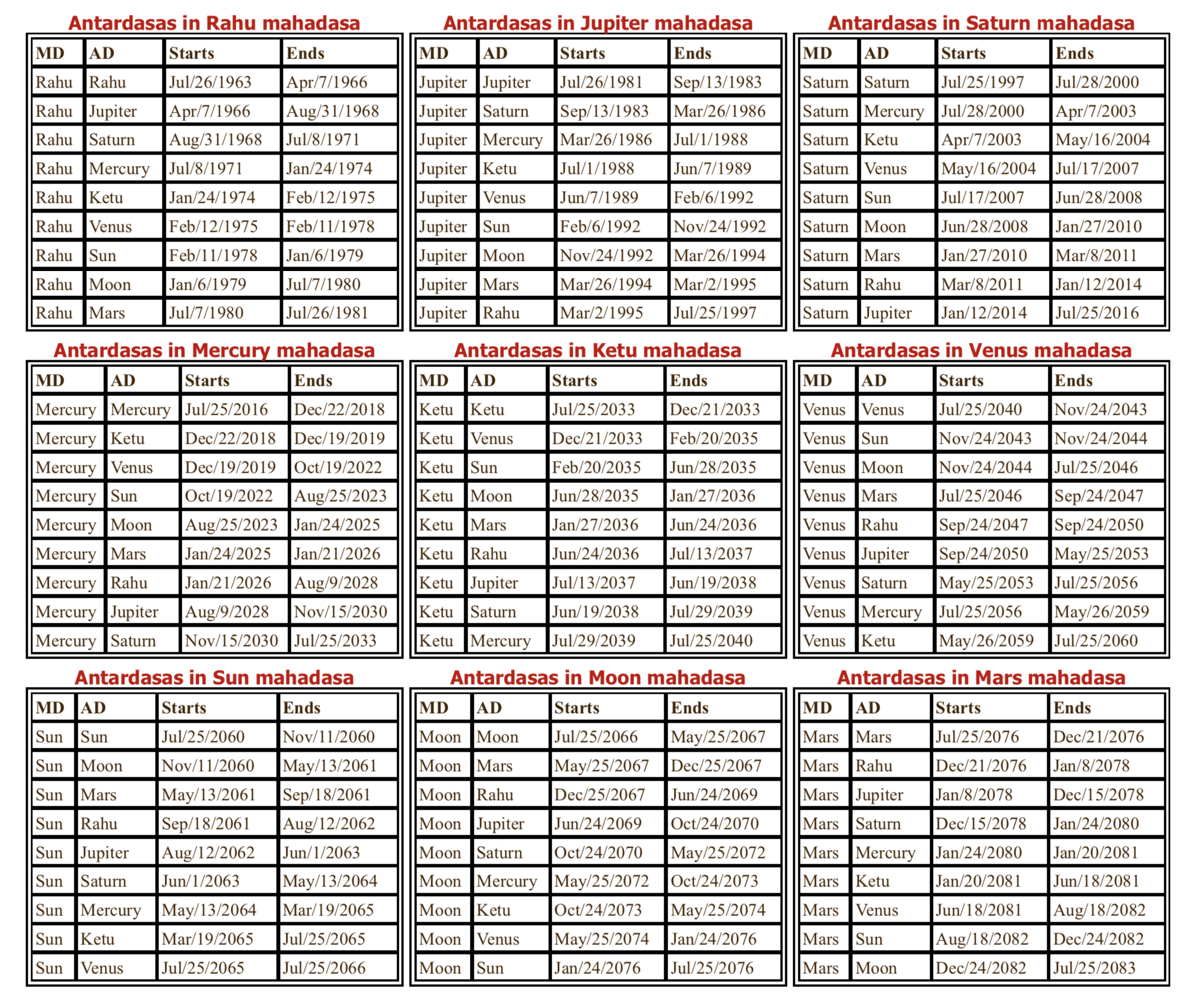
One of the most mysterious and impressive tools in Jyotish is the Dasa cycles. These are planetary activation phases that occur at different levels of the planets in the natal chart in a specific chronological sequence. These rhythms are determined by the exact degree position of the Moon in the natal chart.
Remedies
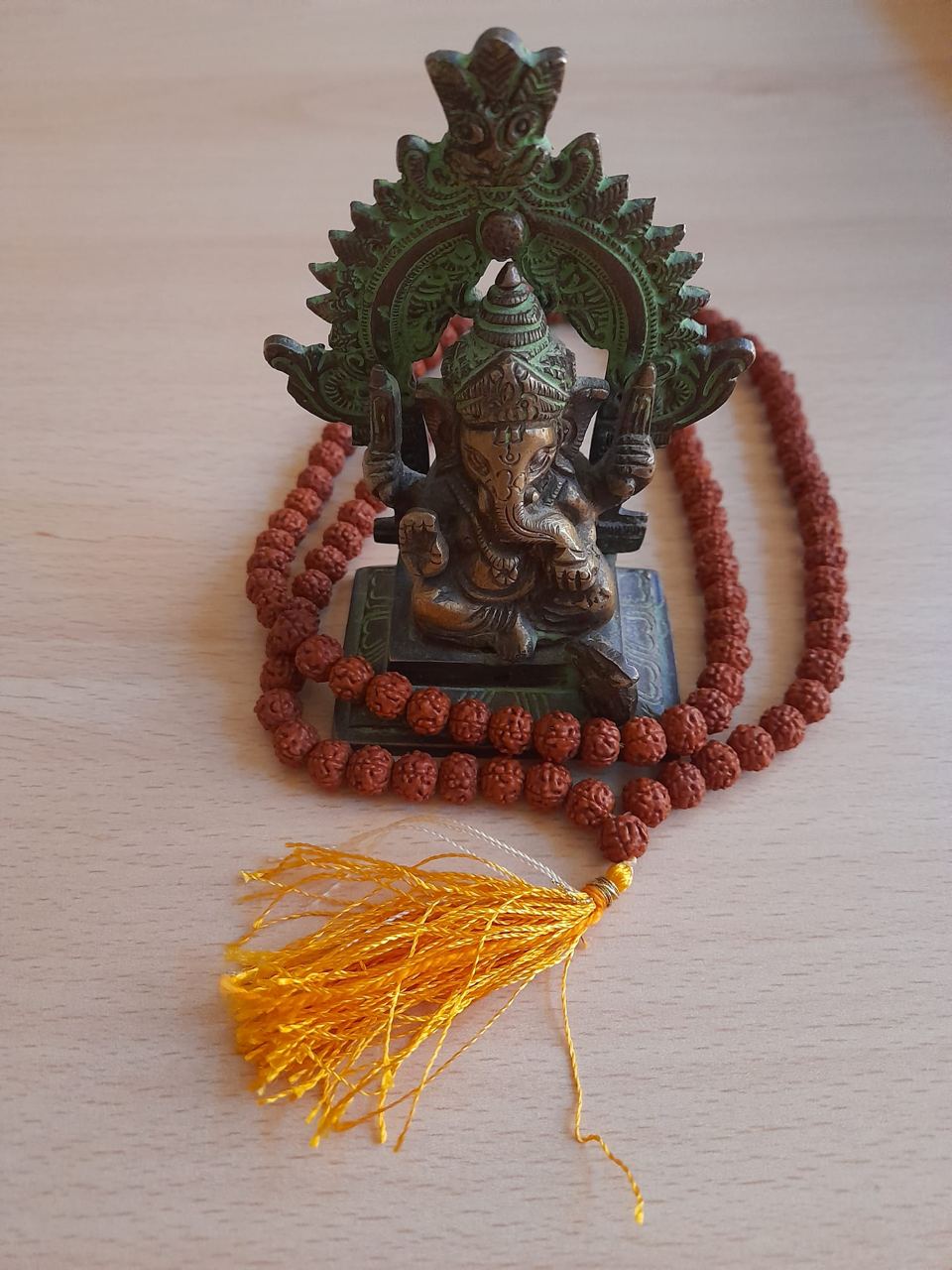
To support various processes and in situations where it seems truly helpful, Jyotish offers a range of so-called Upāye (remedies or remedial measures): quasi-therapeutic or curative measures that you can perform yourself.
When these remedies are practiced and applied, they exert a positive influence on karma—sometimes on an extremely subtle level—to improve one’s life circumstances and mental stability during phases of external and internal development, which are often accompanied by uncertainty and turbulence. In Jyotish specifically, this goal is pursued through a planetary appeasement ritual (Graha Shanti).
continue reading... (in German)
